





 Council for British Archaeology — East Midlands Group: Archaeology for all
Charity No. 1082287
Would you like to explore
the main CBA national site?
Click here for
archaeologyuk.org
Council for British Archaeology — East Midlands Group: Archaeology for all
Charity No. 1082287
Would you like to explore
the main CBA national site?
Click here for
archaeologyuk.org














 The Roots and Development of Bingham, Nottinghamshire
Bingham Heritage Trails Association is carrying out a three-year project examining the historic core of Bingham, and
how it developed through time. This follows on from, and supplements, a successful field-walking project which
examined all 2,000 acres of arable land in the parish.
The current project has now dug 60 1m-
holes, pits, drains and floors that date
square test pits in central Bingham, and is
back to medieval times in some cases. All
finishing off by digging a larger trench to
last year’s finds were entered on a database
explore some of the remains found last year.
over the winter, and plotting of their
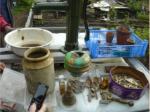
Roughly 10,000 sherds of pottery and other
distribution suggests that a previously
finds have been found in the pits from the
unidentified Roman settlement existed in
Roman period onwards, as well as post-
the centre of Bingham, near the church.
Much of the pottery has now been identified by specialists. The medieval assemblage gives a good indication of where
people were living in Bingham immediately after the Norman Conquest. It looks as though there are also some Anglo
Saxon sherds — did the Roman settlement continue into Anglo-Saxon times? The animal bones, bricks and tiles are
currently being studied, and these will provide further information about how people lived in historic Bingham. There
is still plenty of work left to do unravelling the centuries of history that lie just below the surface of people's gardens.
Guidelines for setting up fieldwork projects, based on BHTA’s experience over the last decade, can be found here.
The Roots and Development of Bingham, Nottinghamshire
Bingham Heritage Trails Association is carrying out a three-year project examining the historic core of Bingham, and
how it developed through time. This follows on from, and supplements, a successful field-walking project which
examined all 2,000 acres of arable land in the parish.
The current project has now dug 60 1m-
holes, pits, drains and floors that date
square test pits in central Bingham, and is
back to medieval times in some cases. All
finishing off by digging a larger trench to
last year’s finds were entered on a database
explore some of the remains found last year.
over the winter, and plotting of their
Roughly 10,000 sherds of pottery and other
distribution suggests that a previously
finds have been found in the pits from the
unidentified Roman settlement existed in
Roman period onwards, as well as post-
the centre of Bingham, near the church.
Much of the pottery has now been identified by specialists. The medieval assemblage gives a good indication of where
people were living in Bingham immediately after the Norman Conquest. It looks as though there are also some Anglo
Saxon sherds — did the Roman settlement continue into Anglo-Saxon times? The animal bones, bricks and tiles are
currently being studied, and these will provide further information about how people lived in historic Bingham. There
is still plenty of work left to do unravelling the centuries of history that lie just below the surface of people's gardens.
Guidelines for setting up fieldwork projects, based on BHTA’s experience over the last decade, can be found here.

 The first two test pits are begun, under the watchful
eye of staff from Trent and Peak Archaeology
The first two test pits are begun, under the watchful
eye of staff from Trent and Peak Archaeology
 East Midlands
Made with Xara Web Designer
East Midlands
Made with Xara Web Designer
 Excavation at Robert Miles School, Bingham, Nottinghamshire
As an adjunct to the ‘Roots and Development’ project (see above), the Bingham Heritage Trails Association decided
to extend a test pit it dug in 2012 and explore the stone surface and posthole that had been revealed, as part of the
CBA’s 2013 Festival of Archaeology.
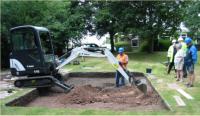
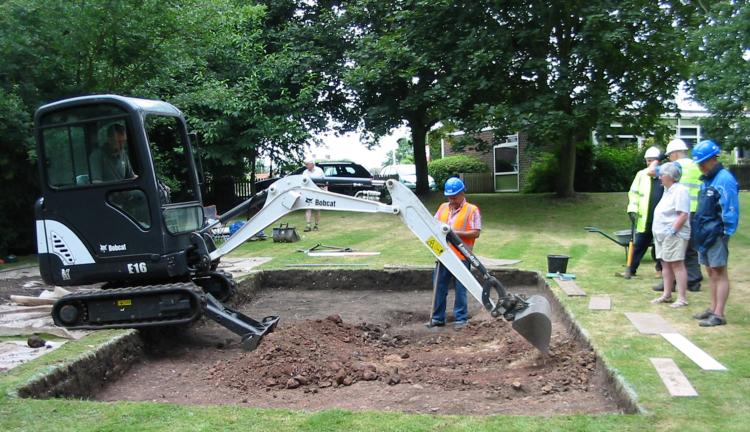
Excavation began in July with the aid of a mini-digger, taking the topsoil off a 4x7m
area and removing a compacted layer of burnt shale that probably formed an access
road when the school was built. Underneath the road was a layer of rubble from
when the old rectory had been demolished in 1964 — this was also removed with the
mini-digger.
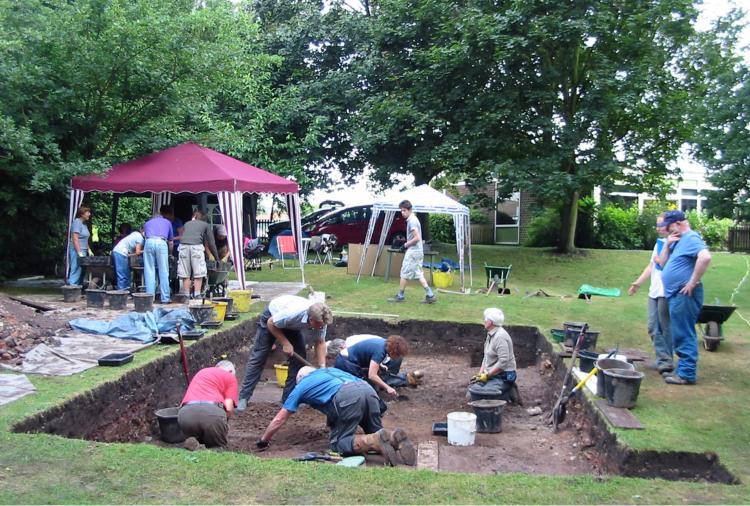
16—18 diggers and sievers spent the next five days working
under the guidance of Laura Binns of Trent & Peak Archaeology,
including three pupils from Toot Hill School. A steady supply of
pottery, animal bones, clay tobacco pipes and a whole range of
other finds kept everyone interested — especially when some of
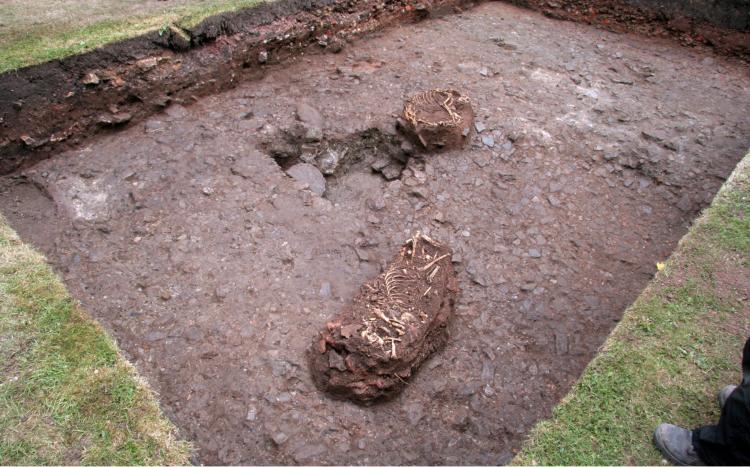
the animal bones turned out to be the skeletons of two hunting
dogs, probably belonging to a 19th-century rector who was
keen on hunting.
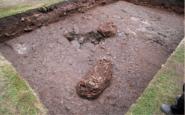
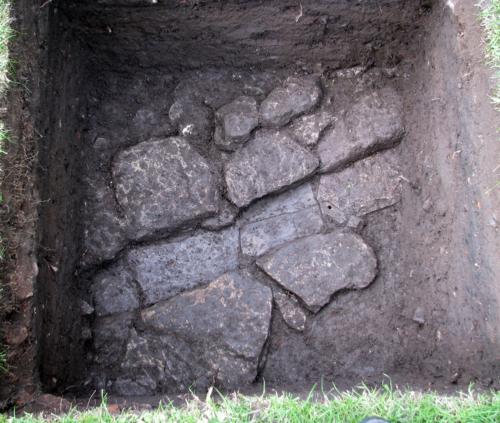
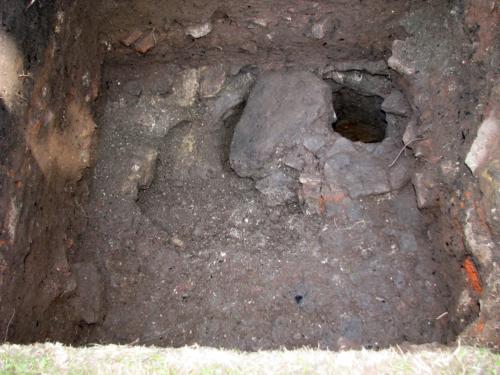
The stone surface that was found in the original test pit ended up covering the whole
trench, subsiding at one point into a medieval sand pit that lay underneath it. It may
have been the floor of a large barn, or perhaps an external yard surface. No more
postholes were discovered, but a pit was uncovered that once held a flagpole that can
be seen on a late 19th / early 20th-century photo. A calendar coin belonging to the Rev
John Walters was found in the bottom, dating to 1764 — these gave not only calendar
dates, but also details of the ecclesiastical year.
Excavation at Robert Miles School, Bingham, Nottinghamshire
As an adjunct to the ‘Roots and Development’ project (see above), the Bingham Heritage Trails Association decided
to extend a test pit it dug in 2012 and explore the stone surface and posthole that had been revealed, as part of the
CBA’s 2013 Festival of Archaeology.
Excavation began in July with the aid of a mini-digger, taking the topsoil off a 4x7m
area and removing a compacted layer of burnt shale that probably formed an access
road when the school was built. Underneath the road was a layer of rubble from
when the old rectory had been demolished in 1964 — this was also removed with the
mini-digger.
16—18 diggers and sievers spent the next five days working
under the guidance of Laura Binns of Trent & Peak Archaeology,
including three pupils from Toot Hill School. A steady supply of
pottery, animal bones, clay tobacco pipes and a whole range of
other finds kept everyone interested — especially when some of
the animal bones turned out to be the skeletons of two hunting
dogs, probably belonging to a 19th-century rector who was
keen on hunting.
The stone surface that was found in the original test pit ended up covering the whole
trench, subsiding at one point into a medieval sand pit that lay underneath it. It may
have been the floor of a large barn, or perhaps an external yard surface. No more
postholes were discovered, but a pit was uncovered that once held a flagpole that can
be seen on a late 19th / early 20th-century photo. A calendar coin belonging to the Rev
John Walters was found in the bottom, dating to 1764 — these gave not only calendar
dates, but also details of the ecclesiastical year.
 Council for British Archaeology
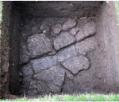
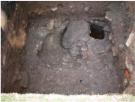
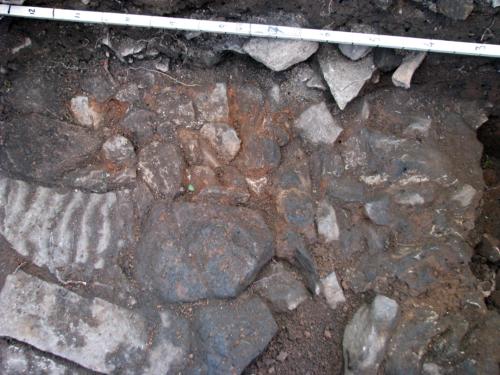
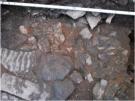 18th/19th-century drain made
from medieval stone roof tiles
Post-hole at the corner of a
stone floor to a 17th-century
timber building
Stone foundation layer to the
13th-century tiled floor of a
manor house
18th/19th-century drain made
from medieval stone roof tiles
Post-hole at the corner of a
stone floor to a 17th-century
timber building
Stone foundation layer to the
13th-century tiled floor of a
manor house
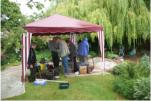
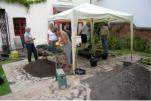
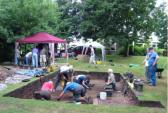
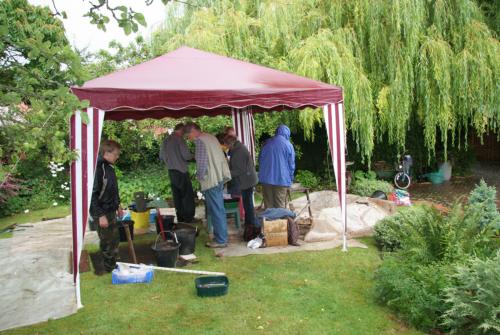
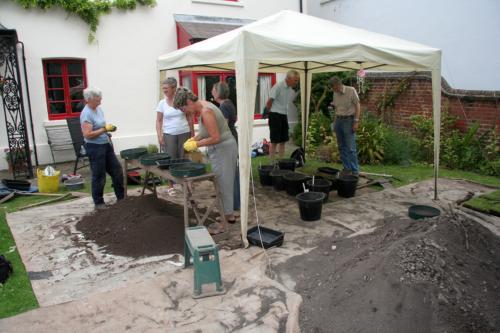
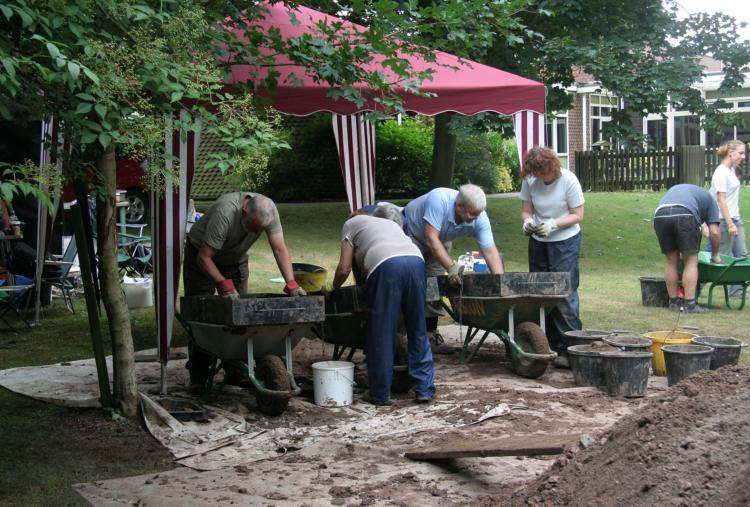
 Gazebos allowed the digging to carry on come
rain or sunshine — mostly rain in summer 2012!
Gazebos allowed the digging to carry on come
rain or sunshine — mostly rain in summer 2012!
 Fieldwork in the East Midlands
Covering five counties, the CBA East Midlands group is in a great position to bring the activities of other archaeological
groups in its area to a wider audience. Whether you’re recording gravestones, fieldwalking, digging test pits or running
large excavations, this page is available to publicise your work. We welcome anything from a single paragraph of text to
a fully illustrated report, or even just a link to your project’s website if one exists — please send any material for
inclusion to david.cba-em@albiondi.plus.com.
Fieldwork guidelines
CBA East Midlands has published guidelines for volunteer groups wishing to undertake programmes of fieldwork. They are
based on Peter Allen’s experience of running such projects for the Bingham Heritage Trails Association and can be
accessed here.
Castleton’s Medieval Hospital, Derbyshire
Members of the Castleton Historical Society and archaeologists from Sheffield University have been researching the
medieval hospital on the outskirts of Castleton since 2007. Find out about what has been found here.
Croxton Kerrial Manor House, Leicestershire
Following a successful geophysical survey of the area near Croxton Kerrial church in an attempt to find the lost manor
house, the Framland Local Archaeology Group (FLAG) has excavated the remains of the manor. Click here to see what
the excavations discovered.
Ice Age Journeys: Farndon, Newark, Nottinghamshire and Bradgate Park, Leicestershire
Ice Age Journeys is continuing its project to learn more about Ice Age hunter-gatherers in the
Newark and Leicester areas. Click here for information on the group’s activities.
Burgage Manor Revealed: Southwell, Nottinghamshire
Southwell Community Archaeology Group and its partner Southwell Town Council received a grant from the Heritage
Lottery Fund (HLF) for an exciting project, Burgage Manor Revealed, in Southwell, Nottinghamshire. The two year
project started in May 2015 with the professional leadership of Trent & Peak Archaeology, and has made a significant
contribution towards understanding how this intriguing part of the town was occupied in the past. Click here to visit the
group’s website and find out more.
Fieldwork in the East Midlands
Covering five counties, the CBA East Midlands group is in a great position to bring the activities of other archaeological
groups in its area to a wider audience. Whether you’re recording gravestones, fieldwalking, digging test pits or running
large excavations, this page is available to publicise your work. We welcome anything from a single paragraph of text to
a fully illustrated report, or even just a link to your project’s website if one exists — please send any material for
inclusion to david.cba-em@albiondi.plus.com.
Fieldwork guidelines
CBA East Midlands has published guidelines for volunteer groups wishing to undertake programmes of fieldwork. They are
based on Peter Allen’s experience of running such projects for the Bingham Heritage Trails Association and can be
accessed here.
Castleton’s Medieval Hospital, Derbyshire
Members of the Castleton Historical Society and archaeologists from Sheffield University have been researching the
medieval hospital on the outskirts of Castleton since 2007. Find out about what has been found here.
Croxton Kerrial Manor House, Leicestershire
Following a successful geophysical survey of the area near Croxton Kerrial church in an attempt to find the lost manor
house, the Framland Local Archaeology Group (FLAG) has excavated the remains of the manor. Click here to see what
the excavations discovered.
Ice Age Journeys: Farndon, Newark, Nottinghamshire and Bradgate Park, Leicestershire
Ice Age Journeys is continuing its project to learn more about Ice Age hunter-gatherers in the
Newark and Leicester areas. Click here for information on the group’s activities.
Burgage Manor Revealed: Southwell, Nottinghamshire
Southwell Community Archaeology Group and its partner Southwell Town Council received a grant from the Heritage
Lottery Fund (HLF) for an exciting project, Burgage Manor Revealed, in Southwell, Nottinghamshire. The two year
project started in May 2015 with the professional leadership of Trent & Peak Archaeology, and has made a significant
contribution towards understanding how this intriguing part of the town was occupied in the past. Click here to visit the
group’s website and find out more.

 Dig for Victory at St Anns Allotments, Nottingham
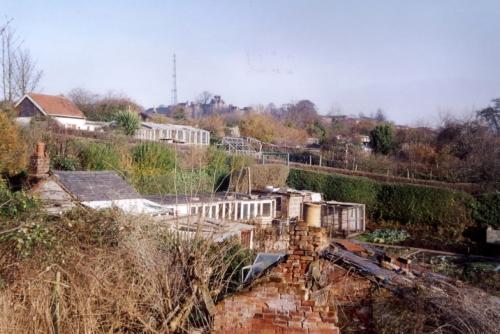
St Anns Allotments in Nottingham, started in the early 19th century, is the oldest and largest area of Victorian
detached town gardens in the world, comprising approximately 700 plots individually enclosed by 32 miles of
hedgerow on a 15 acre site. The site is Grade II* listed. Many plots had elaborate summer houses and greenhouses,
supported by underground water cisterns and wells — one summerhouse even had a wine cellar. Census returns show
that as many as 200 people lived on their plots right through to the 1930s.
STAA Ltd was formed in 1998 by a group of allotment holders to protect and improve these historic gardens. This
charity now manages the site on behalf of the City Council.
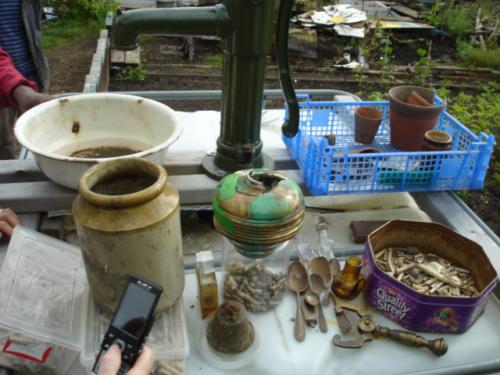
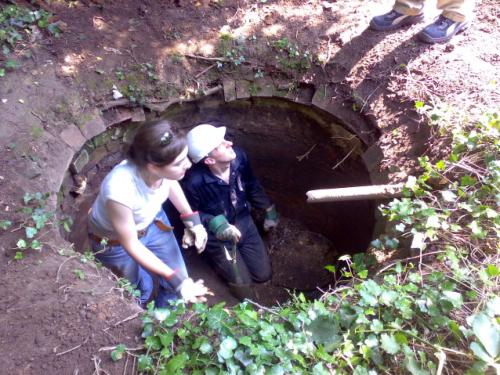
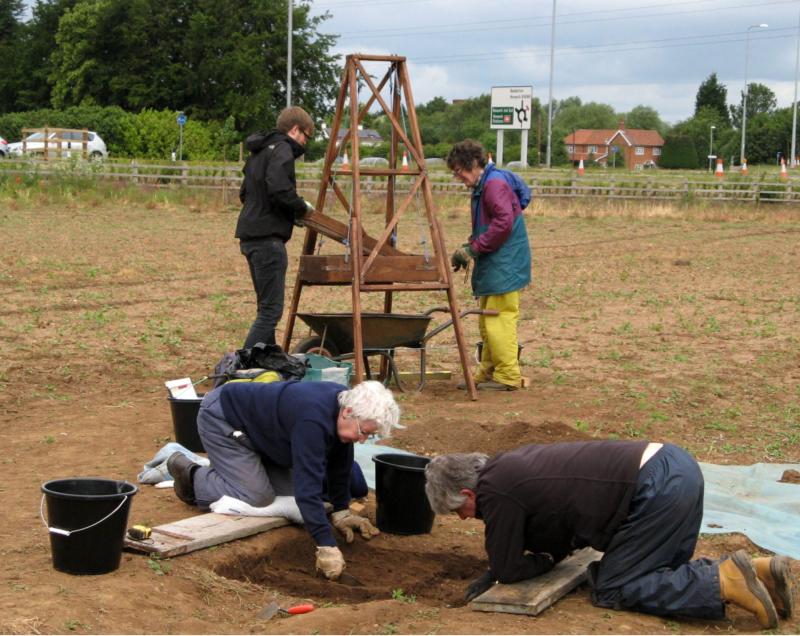
With financial support from the Heritage Lottery Fund and professional support from Trent & Peak Archaeology we ran
our ‘Dig for History’ project, from April to November 2015. The project included setting up a GIS database, recording
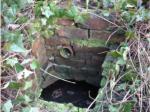
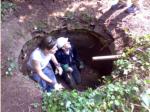
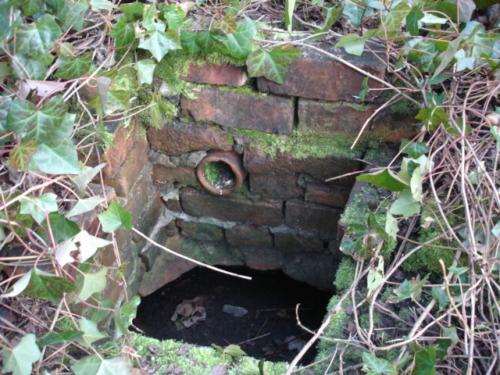
information, excavating a 19th-century well system, a series of community-based
excavations in individual gardens, and evaluation of the project.
Dig for Victory at St Anns Allotments, Nottingham
St Anns Allotments in Nottingham, started in the early 19th century, is the oldest and largest area of Victorian
detached town gardens in the world, comprising approximately 700 plots individually enclosed by 32 miles of
hedgerow on a 15 acre site. The site is Grade II* listed. Many plots had elaborate summer houses and greenhouses,
supported by underground water cisterns and wells — one summerhouse even had a wine cellar. Census returns show
that as many as 200 people lived on their plots right through to the 1930s.
STAA Ltd was formed in 1998 by a group of allotment holders to protect and improve these historic gardens. This
charity now manages the site on behalf of the City Council.
With financial support from the Heritage Lottery Fund and professional support from Trent & Peak Archaeology we ran
our ‘Dig for History’ project, from April to November 2015. The project included setting up a GIS database, recording
information, excavating a 19th-century well system, a series of community-based
excavations in individual gardens, and evaluation of the project.
 Council for British Archaeology — East Midlands Group: Archaeology for all
Charity No. 1082287
Would you like to explore
the main CBA national site?
Click here for
archaeologyuk.org
Council for British Archaeology — East Midlands Group: Archaeology for all
Charity No. 1082287
Would you like to explore
the main CBA national site?
Click here for
archaeologyuk.org
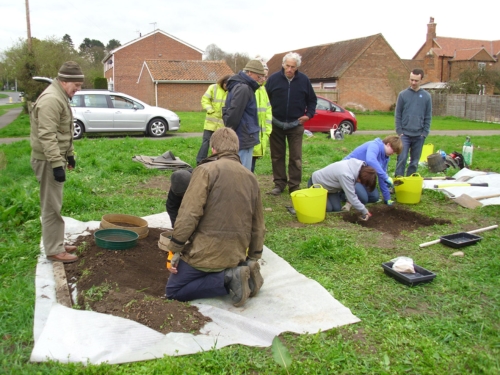
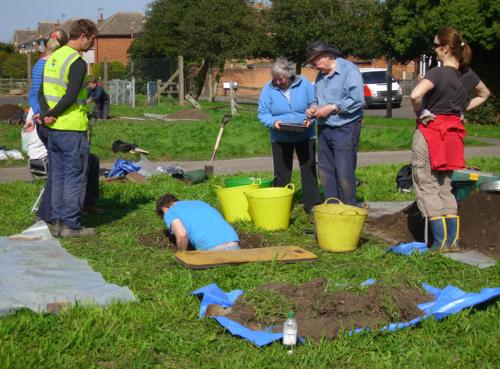 The first two test pits are begun, under the watchful
eye of staff from Trent and Peak Archaeology
The first two test pits are begun, under the watchful
eye of staff from Trent and Peak Archaeology

















 18th/19th-century drain made
from medieval stone roof tiles
Post-hole at the corner of a
stone floor to a 17th-century
timber building
Stone foundation layer to the
13th-century tiled floor of a
manor house
18th/19th-century drain made
from medieval stone roof tiles
Post-hole at the corner of a
stone floor to a 17th-century
timber building
Stone foundation layer to the
13th-century tiled floor of a
manor house
 Fieldwork in the East Midlands
Covering five counties, the CBA East Midlands group is in a great position to bring the activities of other archaeological
groups in its area to a wider audience. Whether you’re recording gravestones, fieldwalking, digging test pits or running
large excavations, this page is available to publicise your work. We welcome anything from a single paragraph of text to
a fully illustrated report, or even just a link to your project’s website if one exists — please send any material for
inclusion to david.cba-em@albiondi.plus.com.
Fieldwork guidelines
CBA East Midlands has published guidelines for volunteer groups wishing to undertake programmes of fieldwork. They are
based on Peter Allen’s experience of running such projects for the Bingham Heritage Trails Association and can be
accessed here.
Castleton’s Medieval Hospital, Derbyshire
Members of the Castleton Historical Society and archaeologists from Sheffield University have been researching the
medieval hospital on the outskirts of Castleton since 2007. Find out about what has been found here.
Croxton Kerrial Manor House, Leicestershire
Following a successful geophysical survey of the area near Croxton Kerrial church in an attempt to find the lost manor
house, the Framland Local Archaeology Group (FLAG) has excavated the remains of the manor. Click here to see what
the excavations discovered.
Ice Age Journeys: Farndon, Newark, Nottinghamshire and Bradgate Park, Leicestershire
Ice Age Journeys is continuing its project to learn more about Ice Age hunter-gatherers in the
Newark and Leicester areas. Click here for information on the group’s activities.
Burgage Manor Revealed: Southwell, Nottinghamshire
Southwell Community Archaeology Group and its partner Southwell Town Council received a grant from the Heritage
Lottery Fund (HLF) for an exciting project, Burgage Manor Revealed, in Southwell, Nottinghamshire. The two year
project started in May 2015 with the professional leadership of Trent & Peak Archaeology, and has made a significant
contribution towards understanding how this intriguing part of the town was occupied in the past. Click here to visit the
group’s website and find out more.
Fieldwork in the East Midlands
Covering five counties, the CBA East Midlands group is in a great position to bring the activities of other archaeological
groups in its area to a wider audience. Whether you’re recording gravestones, fieldwalking, digging test pits or running
large excavations, this page is available to publicise your work. We welcome anything from a single paragraph of text to
a fully illustrated report, or even just a link to your project’s website if one exists — please send any material for
inclusion to david.cba-em@albiondi.plus.com.
Fieldwork guidelines
CBA East Midlands has published guidelines for volunteer groups wishing to undertake programmes of fieldwork. They are
based on Peter Allen’s experience of running such projects for the Bingham Heritage Trails Association and can be
accessed here.
Castleton’s Medieval Hospital, Derbyshire
Members of the Castleton Historical Society and archaeologists from Sheffield University have been researching the
medieval hospital on the outskirts of Castleton since 2007. Find out about what has been found here.
Croxton Kerrial Manor House, Leicestershire
Following a successful geophysical survey of the area near Croxton Kerrial church in an attempt to find the lost manor
house, the Framland Local Archaeology Group (FLAG) has excavated the remains of the manor. Click here to see what
the excavations discovered.
Ice Age Journeys: Farndon, Newark, Nottinghamshire and Bradgate Park, Leicestershire
Ice Age Journeys is continuing its project to learn more about Ice Age hunter-gatherers in the
Newark and Leicester areas. Click here for information on the group’s activities.
Burgage Manor Revealed: Southwell, Nottinghamshire
Southwell Community Archaeology Group and its partner Southwell Town Council received a grant from the Heritage
Lottery Fund (HLF) for an exciting project, Burgage Manor Revealed, in Southwell, Nottinghamshire. The two year
project started in May 2015 with the professional leadership of Trent & Peak Archaeology, and has made a significant
contribution towards understanding how this intriguing part of the town was occupied in the past. Click here to visit the
group’s website and find out more.
 Dig for Victory at St Anns Allotments, Nottingham
St Anns Allotments in Nottingham, started in the early 19th century, is the oldest and largest area of Victorian
detached town gardens in the world, comprising approximately 700 plots individually enclosed by 32 miles of
hedgerow on a 15 acre site. The site is Grade II* listed. Many plots had elaborate summer houses and greenhouses,
supported by underground water cisterns and wells — one summerhouse even had a wine cellar. Census returns show
that as many as 200 people lived on their plots right through to the 1930s.
STAA Ltd was formed in 1998 by a group of allotment holders to protect and improve these historic gardens. This
charity now manages the site on behalf of the City Council.
With financial support from the Heritage Lottery Fund and professional support from Trent & Peak Archaeology we ran
our ‘Dig for History’ project, from April to November 2015. The project included setting up a GIS database, recording
information, excavating a 19th-century well system, a series of community-based
excavations in individual gardens, and evaluation of the project.
Dig for Victory at St Anns Allotments, Nottingham
St Anns Allotments in Nottingham, started in the early 19th century, is the oldest and largest area of Victorian
detached town gardens in the world, comprising approximately 700 plots individually enclosed by 32 miles of
hedgerow on a 15 acre site. The site is Grade II* listed. Many plots had elaborate summer houses and greenhouses,
supported by underground water cisterns and wells — one summerhouse even had a wine cellar. Census returns show
that as many as 200 people lived on their plots right through to the 1930s.
STAA Ltd was formed in 1998 by a group of allotment holders to protect and improve these historic gardens. This
charity now manages the site on behalf of the City Council.
With financial support from the Heritage Lottery Fund and professional support from Trent & Peak Archaeology we ran
our ‘Dig for History’ project, from April to November 2015. The project included setting up a GIS database, recording
information, excavating a 19th-century well system, a series of community-based
excavations in individual gardens, and evaluation of the project.